 ES
ES  EN
EN 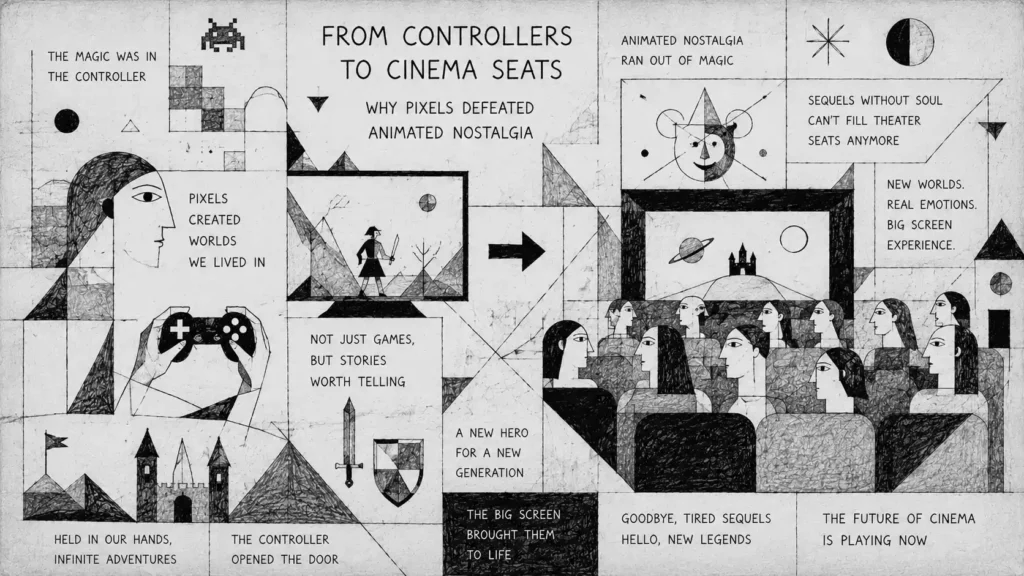
por Juan Butten
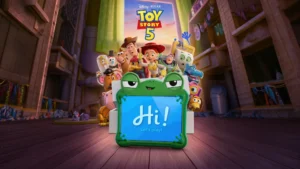
For more than two decades, Hollywood relied on a seemingly foolproof formula to guarantee family box office success: squeeze every last drop out of animated franchises. If an animated film became a hit, the studio machine would inevitably follow it with a sequel, then a trilogy, then a Part 4, and eventually a Part 5.
But in 2026, the age of recycled nostalgia has finally reached its breaking point.
Audiences—children, teenagers, and adults alike—have begun turning away from worn-out animated franchises in favor of a new cinematic phenomenon: video game adaptations.
The gaming world has dethroned animation’s old giants.
The shift is impossible to ignore.
While major studios struggle to justify fifth installments of beloved animated characters—stories that often feel manufactured, emotionally exhausted, and designed primarily to sell merchandise—movie theaters are packed whenever a beloved video game universe makes the leap to the big screen.
Today’s audiences no longer want to watch the same animated hero solve the same problem for the fifth time.
They want to experience rich, living worlds they’ve already spent hundreds of hours exploring with a controller in their hands.
The reason behind this phenomenon goes far beyond visual spectacle.
It is fundamentally about storytelling.
Modern video game adaptations have learned to respect their source material, treating stories born from pixels with the seriousness once reserved for great literature. Video games offer fresh mythologies, unexplored worlds, and genuine adventures, while many animated sequels have gradually traded imagination for predictable jokes, familiar formulas, and creative safety.
A fourth or fifth animated sequel often feels like a corporate obligation.
A great video game adaptation feels like a discovery.
There is also an undeniable generational factor.
The generation that grew up playing online isn’t searching for the passive nostalgia of traditional animated films.
They’re looking for emotional interactivity.
Watching a film adaptation of a favorite game becomes the culmination of an experience that began in a bedroom, on a console, or during countless multiplayer sessions with friends.
It is the moment when interactive art comes fully alive on the biggest screen possible.
Hollywood has finally realized that the strongest box office magnet for younger audiences isn’t the cartoon character they watched on television at five years old.
It’s the avatar they conquered virtual worlds with just yesterday.
The decline of late-stage animated sequels—and the simultaneous rise of video game adaptations—is a lesson in humility for the entertainment industry.
Audiences don’t reject animation.
They reject creative complacency.
Video games have become Hollywood’s richest source of fresh stories, proving that the future of cinema will not be built by endlessly recycling the past, but by embracing the passions that truly define new generations.