 EN
EN  ES
ES 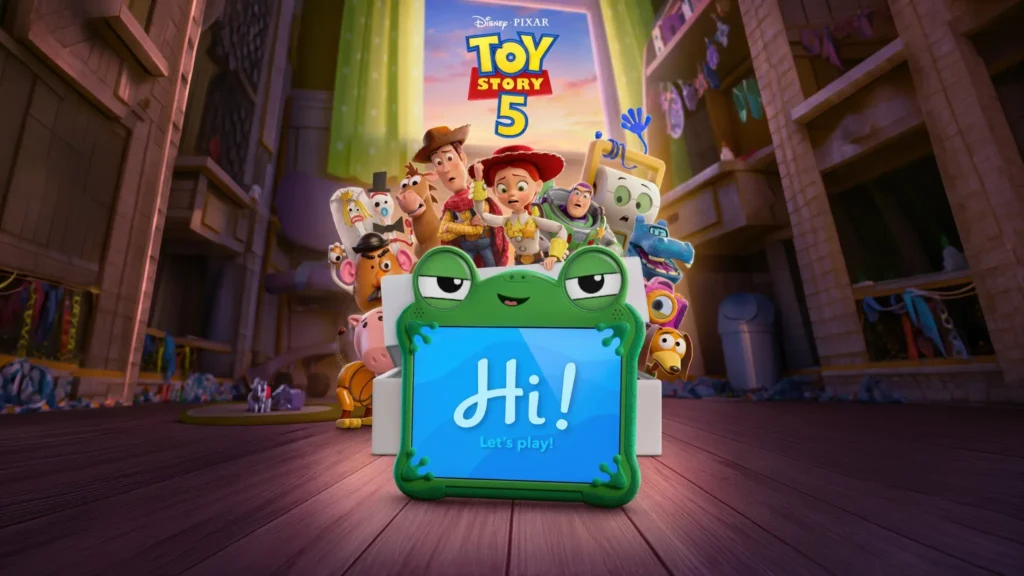
By Juan Butten
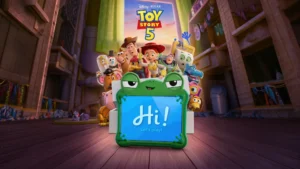
The screen lights up, and the silhouette of the iconic blue cloud wallpaper immediately transports us back to childhood. However, this time, the atmosphere in the room is not the same. There are no wooden blocks scattered across the floor, nor are there hand-drawn pictures taped to the walls. The only glow illuminating the faces of this new generation of children comes from the bluish, magnetic, and hypnotic glare of a latest-generation tablet. In a corner of the bed, covered by a thin layer of dust, Woody and Buzz Lightyear watch in silence. With Toy Story 5, Pixar is no longer talking to us about growing up and letting go; it is speaking about a silent war being waged today in every home on the planet: traditional toys against the empire of screens.
Crossing the barrier into a fifth installment seemed like a purely commercial move, but the studio has managed to transform franchise fatigue into a heartbreaking social mirror. This time, the plot does not revolve around a greedy toy collector or a hostile daycare. The ultimate villain has no face, no voice, and no evil plan: it is the social media algorithm and the infinite stream of short videos that has captured the attention of Generation Alpha, rendering the very idea of using one’s imagination to play completely obsolete.
The true value of the visual chronicle this film offers lies in its brutal honesty. Watching Buzz Lightyear attempt to compete against a hyper-realistic, open-world video game, or Woody trying to decipher why a child prefers to compulsively swipe their finger across tempered glass instead of inventing a cowboy story, is a perfect metaphor for the modern attention crisis. Pixar does not sugarcoat reality; it portrays with surgical precision how electronic devices have altered family dynamics, isolating children in digital bubbles and leaving parents in a desperate search to recover lost connection.
On a technical level, the animation plays brilliantly with this contrast. While Woody’s design retains his warm textures of fabric, wood, and leather worn down by the years, the technological world surrounding him is cold, polished, and filled with LED lights and touchscreens of an unforgiving sharpness. This aesthetic divide constantly underlines the film’s thesis: the warmth of the analog world is being devoured by the coldness of the digital one.
When the theater lights come up, the silence among the adults is absolute. Toy Story 5 leaves a bittersweet aftertaste because it does not offer a magical solution to a very real problem. It is not a simple, nostalgic attack against technology, but an urgent reminder of the value of boredom, unfiltered creativity, and shared play. As the credits roll, one certainty lingers in the air: Woody and Buzz’s battle was never just for a child’s love, but to save the very essence of childhood in a world dominated by screens.